PractitionerLab · Flagship
For psychology learners & early-career practitioners
Practise applied skills with simulated clients. Get feedback on active listening, reflective responding, open-ended questioning and more.
Try PractitionerLab
Psychology Practice People
QultureCare builds the practice layer for psychology — starting with PractitionerLab, a simulated practice environment where psychology learners and early-career practitioners rehearse real skills with AI-simulated clients, and get structured feedback on six professional competencies.
1,000+ practice sessions by psychology learners Structured feedback on six professional competencies Built by an engineer-turned-psychologist
This is a live practice session. The simulated client responds in real time to your technique — and every session ends with a structured feedback report.
This is what a live session looks like. The simulated client responds in real time to your technique.
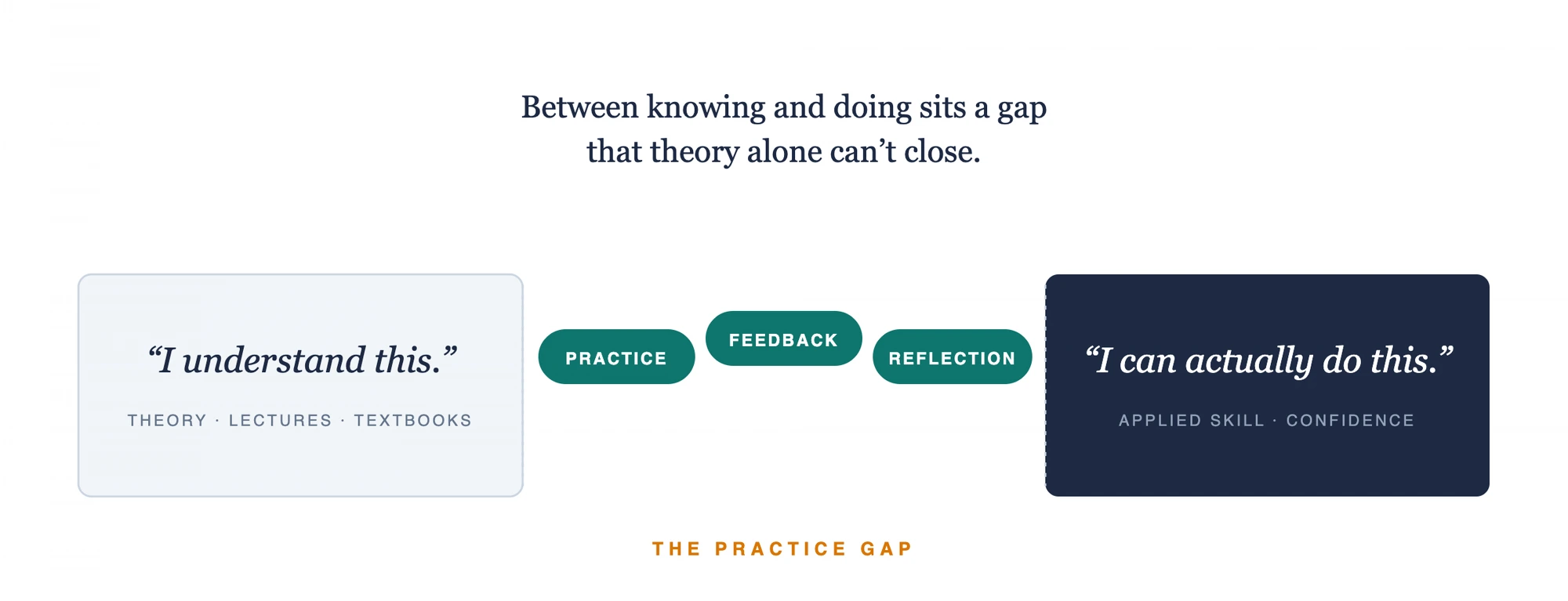
Pilots have simulators. Surgeons have teaching hospitals. Engineers test in staging environments before anything goes live. But a psychology student's first real conversation is often exactly that — real. Between "I understand this" and "I can actually do this" sits a gap that lectures and textbooks can't close.
Practice closes it. Safe, repeatable, judgement-free practice — with feedback that tells you precisely what to work on next. That's what we're building.
PractitionerLab · Flagship
Practise applied skills with simulated clients. Get feedback on active listening, reflective responding, open-ended questioning and more.
Try PractitionerLabAcademic Partnership
Give students targeted practice for the skills you teach, with rubric-based feedback aligned to outcome-based education.
Explore academic partnershipOur approach
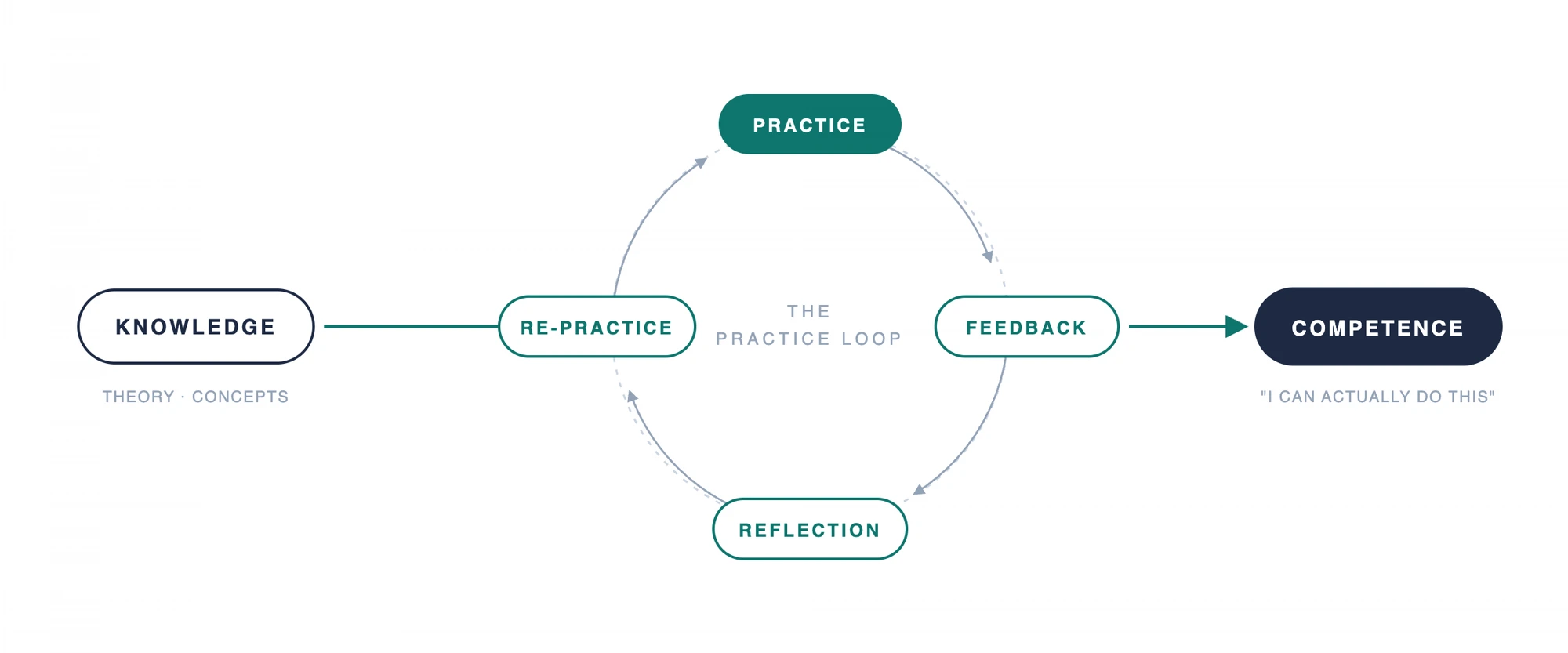
QultureCare combines evidence-informed thinking, deliberate practice and human expertise to create meaningful learning and development experiences.
Our work is grounded in established knowledge and responsible practice.
We believe meaningful capability develops through application, reflection and deliberate practice.
Technology and tools should strengthen—not replace—professional judgement and human expertise.
We're early and deliberately so — testing our assumptions with real learners and educators, and letting evidence lead.
"In ten years as a software engineer, I built the simulations that code gets tested in — and never shipped anything that hadn't been through them. Then I trained in psychology, and found there was no way to test my skills before a real client was sitting in front of me. So I'm building one."
— Swarika Jain, Founder · ICF-ACC · MSc Psychology
Read the full storyFree to try. No sign-up needed. Sessions are private.
Teaching psychology? Partner with us